.svg)

Blogs
Why Global Capability Centers matter now for Japanese companies building in-house capabilities for the digital era
January 19, 2026

.svg)
.svg)



Blogs
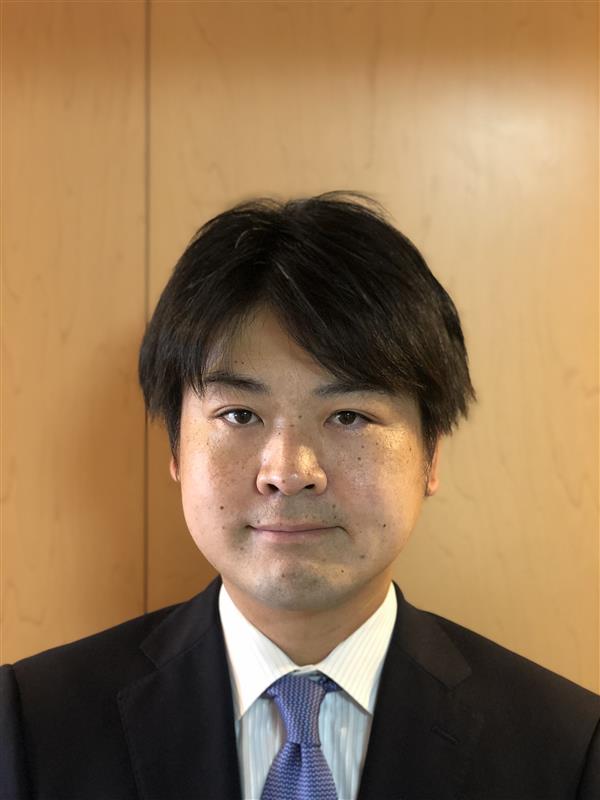
Hironobu Suzuki


For many Japanese companies, Global Capability Centers (GCCs) in India are still associated with cost efficiency or offshore IT delivery.
That framing no longer reflects reality.
Across industries, GCCs are rapidly evolving into strategic engines for in-house capability building, enabling companies to compete in a market where digital, IT, and product development are inseparable from business success.
At Twimbit, we see GCCs not as an operational choice, but as a strategic decision about where and how future capabilities are built.
Historically, India-based centers supported local operations or handled narrowly defined execution tasks.
Today, leading companies are using GCCs to develop global products from India, not just products for India.
This shift is driven by a simple reality:
Without strong IT and digital capabilities embedded inside the organization, sustainable competitiveness is no longer possible.
As products become increasingly software-driven, innovation depends on teams that:
This is why GCCs are increasingly positioned as in-house innovation hubs, not outsourcing destinations.
The most important change is not scale or cost —
it is the move from BPO-style execution to innovation ownership.
Across global markets, innovation today requires:
This model has long been common among US-based IT companies.
What is new is that non-IT companies are now adopting the same approach, using GCCs to embed digital capabilities directly into product development.
In industries such as pharmaceuticals, manufacturing, and automotive, GCCs now support:
Once leading global players adopt this model, it quickly becomes a reference point for peers across the industry.
Many Japanese companies recognize the importance of GCCs, yet struggle to fully leverage them.
Several shifts are required.
Rethinking Development in the Digital Era
Hardware-only development is no longer sufficient.
GCCs must be embedded into digitally integrated product development models.
Adapting Management Where Necessary
Japanese management strengths — quality, discipline, long-term thinking — remain valuable.
At the same time, GCCs often require selective alignment with global practices, particularly around:
Balancing Quality with Iteration
High quality does not have to mean inflexible processes.
Global innovators increasingly rely on:
Redefining the Division of Labor
A clear answer is needed to:
Without this clarity, GCC initiatives often lose momentum.
Successful GCCs are not treated as offshore execution units.
They function as strategic extensions of headquarters, tightly linked to core business objectives.
This requires:
In this sense, GCCs are not about replacing domestic teams, but about augmenting organizational capacity at scale.
5. How Twimbit Approaches GCC Strategy
At Twimbit, we do not view GCCs as a checklist for setup or a location decision.
Our focus is on helping Japanese companies:
The most important questions often come before execution begins:
These are strategic questions, not operational ones.
GCCs are no longer optional experiments.
They are becoming a foundation for competing in a digital, software-driven global economy.
The real question for Japanese companies is no longer:
But rather:
At Twimbit, we believe that answering this question thoughtfully is the first step toward sustainable growth.

.svg)






.svg)
