.svg)

Blogs
What Will It Take for Telcos to Nail Sovereign Cloud?
February 19, 2026

.svg)
.svg)



Blogs
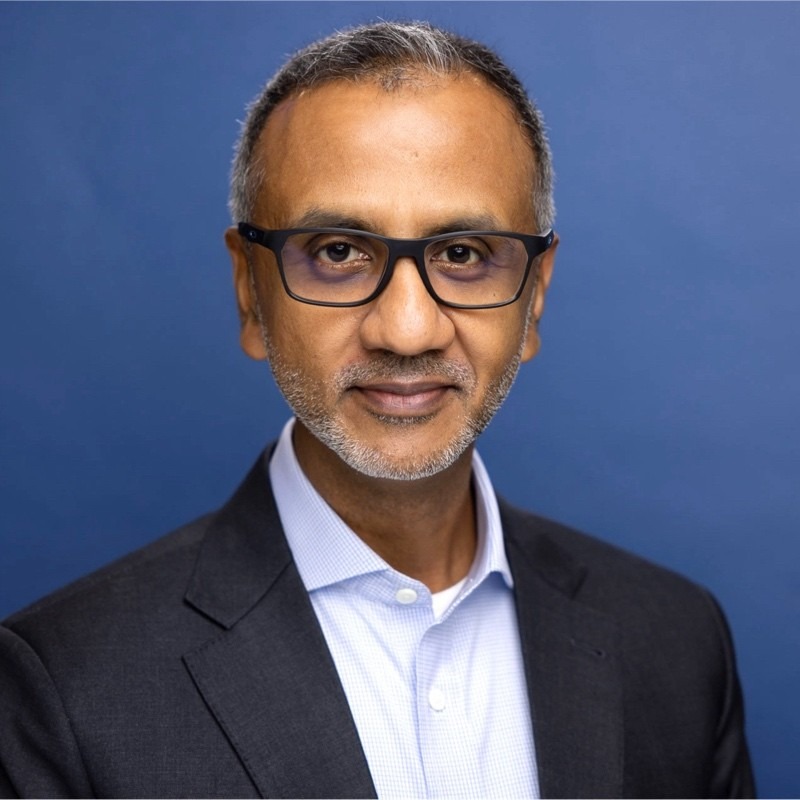
Jayanth Nagarajan


For more than a decade, telecom operators have spoken about becoming “tech-cos.” They have invested in cloud, cybersecurity, edge computing, platforms, and enterprise services. They have articulated B2B ambitions that extend beyond connectivity and seek to reposition telcos as digital infrastructure partners.
Progress has been uneven. Hyperscalers captured much of the cloud value. Over-the-top players redefined digital platforms. Enterprise transformation often bypassed the telco layer.
This raises a timely question: is sovereign cloud the strategic pathway that allows telcos to make meaningful progress toward their tech-co ambitions, while also reshaping how investors value the sector?
Sovereign cloud has moved from regulatory compliance to national strategy.
In an era shaped by AI acceleration, semiconductor export controls, cyber risk, and geopolitical fragmentation, nations are reassessing where their data resides, who controls their compute, and how AI infrastructure is governed. Sovereign cloud is no longer only about data residency. It now includes national control over AI infrastructure, secure orchestration of workloads, and the ability to develop and deploy sovereign AI at scale.
Gartner projects sovereign cloud infrastructure as a service spending to reach USD 80 billion in 2026 and grow to approximately USD 110 billion in 2027.¹ Longer-term industry forecasts suggest sovereign and regulated cloud segments could scale into the hundreds of billions globally in the coming decade.
This is not a niche category. It is the re-architecting of national digital infrastructure.
Sovereign cloud is no longer about where data sleeps. It is about who controls the intelligence that wakes it up.
For telcos, the prize is more than incremental revenue. If executed well, sovereign cloud can help shift telecom equities from the dividend sleeve of an investor’s portfolio toward the growth sleeve, supporting stronger multiples and sustained market capitalization expansion.
A new layer is emerging above infrastructure: sovereign large language models.
Governments across India, Southeast Asia, the Middle East, Japan, South Korea, and Europe are funding domestic AI models trained on local languages, cultural context, and regulated datasets. Sovereign cloud becomes the foundation for sovereign intelligence.
Japan’s Ministry of Economy, Trade and Industry has approved subsidies of up to 72.5 billion yen across projects designed to strengthen computational resources for AI development under its Economic Security Promotion framework.²
South Korea’s Ministry of Science and ICT has outlined national GPU procurement plans and the establishment of a National AI Computing Center, including procurement of approximately 13,000 GPUs through supplementary budgets and further cluster-level allocations of advanced accelerators.³ ⁴
At the India AI Impact Summit 2026 (February 16-20), sovereign themes moved to center stage, with nearly 10% of the 700+ sessions dedicated explicitly to sovereign AI, national compute capacity, and indigenous foundation models - going well beyond policy discussions alone.
These are not symbolic initiatives. They represent state-level underwriting of AI compute as strategic infrastructure.
AI infrastructure has quietly become a matter of economic security policy.
Telcos are natural participants in this shift. They operate secure, regulated infrastructure. They run national backbone networks and mission-critical communications. They hold deep relationships with government and regulated industries. If structured correctly, they can anchor national AI clusters that support both training and inference of domestic models aligned with national priorities. Trust and regulatory familiarity are embedded in their operating model.
They control the connective tissue of the economy. Fiber, mobile networks, subsea systems, spectrum assets, and distributed edge facilities form a national digital fabric well suited to sovereign deployments.
The shift from AI training to AI inference further strengthens the telco case. Training large models is centralized and capital intensive. Inference is distributed and latency sensitive. As AI applications move into manufacturing, healthcare, energy, transport, and defense, compute often needs to sit closer to the point of use.
Edge deployments, 5G private networks, and distributed datacenters are already part of the telecom footprint. Inference at the edge sits squarely in their domain.
Across regions, operators are moving.
In Singapore, Singtel has invested in its Paragon orchestration platform, enabling enterprises to deploy and manage applications across edge and cloud environments. Paragon has received industry recognition for enabling multi-access edge computing and ecosystem integration.⁵ Singtel has also partnered with GMI Cloud to enable GPU capacity expansion, strengthening its AI-ready infrastructure proposition.⁶
Indosat Ooredoo Hutchison (IOH) has rapidly transitioned from a traditional telco to an 'AI-native' powerhouse. Indosat has pioneered GPU Merdeka: a sovereign AI cloud factory powered by a strategic NVIDIA partnership. But their play goes beyond semiconductors. By collaborating with Accenture to deploy the AI Refinery platform, they are enabling Indonesian enterprises to build domain-specific AI solutions that respect local data residency. Indosat is crucially a foundational anchor for Sahabat-AI, the national open-source LLM ecosystem. By training models in Bahasa Indonesia and regional dialects on local infrastructure, Indosat isn't just hosting data. It is securing Indonesia’s cultural and digital future.
In India, Bharti Airtel has expanded data center capacity and sovereign cloud partnerships aligned with enterprise and public-sector digitization. Reliance Jio has invested heavily in hyperscale infrastructure and digital platforms as part of India’s broader push toward technological self-reliance. TCS’ subsidiary HyperVault and AMD announced this week they will codevelop a rack-scale AI infrastructure design based on the AMD “Helios” platform in support of India’s national AI initiatives, enabling enterprises across India to gain access to 200MW of capacity for sovereign AI factories.
In South Korea, SK Telecom’s Haein cluster provides GPU-as-a-Service alongside a fully integrated AI software stack, including orchestration and lifecycle management. The Korean Government is leveraging this environment for its Sovereign AI Foundation Model Project.⁷
In Japan, SoftBank’s Infrinia AI Cloud OS provides a unified software stack for GPU management, Kubernetes-based services, and inference delivery. It enables Kubernetes-as-a-Service and Inference-as-a-Service models designed to reduce operational complexity and accelerate enterprise adoption.⁸
In Europe, Deutsche Telekom, Orange, and Telefónica have engaged in sovereign cloud initiatives aligned with Gaia-X and broader EU digital autonomy efforts.
These examples demonstrate a consistent theme. Sovereign cloud success depends on integrating hardware, software, orchestration, and ecosystem alignment.
Access to advanced compute matters. However, sovereign cloud cannot be reduced to GPU procurement. It requires secure control planes, strong identity frameworks, workload portability, governance mechanisms, and resilience across hybrid and edge environments.
Full-stack orchestration is central. Platforms such as Singtel’s Paragon and SoftBank’s Infrinia illustrate how software layers that abstract complexity can become strategic differentiators. SK Telecom’s Haein further shows that combining GPU capacity with integrated orchestration and lifecycle tools creates a more defensible platform.
Commercial models must evolve. AI-native enterprises expect rapid onboarding, API-driven provisioning, and consumption-based pricing. Sovereign cloud must feel as agile as global cloud platforms while meeting local regulatory requirements.
Ecosystem development is essential. Regulators, national and global system integrators, ISVs, semiconductor partners, hyperscalers, and AI model developers must align. The operator that succeeds will be the one that convenes and orchestrates this ecosystem while maintaining sovereign governance.
The telcos that win sovereign cloud will not need to build everything themselves. They will orchestrate better, tailored to the local context.
If executed well, sovereign cloud positions telcos as foundational to national AI infrastructure. It can unlock durable, high-value revenue streams, deepen engagement with governments and regulated industries, and materially strengthen investor perception.
If executed poorly, operators risk remaining connectivity providers beneath someone else’s sovereign platform.
National AI strategies are being defined now. Infrastructure commitments are being locked in now. Ecosystems are forming now.
Sovereign cloud may be the clearest pathway yet for telcos to advance their long-held tech-co ambitions and shift from yield-oriented valuation towards the growth part of investors’ portfolio.
The question is whether they can move with the urgency and strategic clarity that this moment demands. The time to build is now.
References
1. Gartner, “Gartner Says Worldwide Sovereign Cloud IaaS Spending Will Total US$80 Billion in 2026,” February 9, 2026.
2. Japan Ministry of Economy, Trade and Industry, press release on AI compute subsidies under the Economic Security Promotion Act.
3. Ministry of Science and ICT, Republic of Korea, National AI Computing Center and GPU procurement plans.
4. MSIT supplementary budget documentation outlining 13,000 GPU procurement.
5. Singtel, “Singtel Digital InfraCo Paragon Platform Recognised,” media release.
6. Singtel, “Singtel and GMI Cloud Partner to Expand GPU Capacity,” media release.
7. SK Telecom, “Haein AI Cluster” press release and related coverage.
8. SoftBank Corp., “SoftBank Announces Infrinia AI Cloud OS,” January 21, 2026.

.svg)






.svg)
