.svg)

Blogs
Rethinking Chatbot Performance in Global Travel 2026
March 19, 2026

.svg)
.svg)


Blogs
.jpeg)
Harshit Gulati


Conversational AI is fast becoming a frontline channel for customer engagement. Twimbit research survey shows that 58% of organisations are already deploying or piloting chatbots and virtual agents, making conversational AI the widely implemented AI capability in CX today. With 76% of consumers comfortable with AI-led interactions when seamless human escalation is available, the focus is now shifting from adoption to experience quality.
To understand how far the industry has truly progressed, we at Twimbit benchmarked 21 airline and travel booking chatbots across the US, Europe, Asia, Africa, and the UK. The result is The Travel Chatbot Experience Index 2026, a structured evaluation of how well travel chatbots perform not in demos, but in real customer scenarios.
Across markets, digital access is now universal. The differentiator is no longer whether a chatbot is available, it’s how it performs when customers need help most.
Our benchmark shows:
In short: the industry has scaled automation. It has not yet scaled intelligence.
To evaluate performance consistently, we built a framework around five pillars that define chatbot excellence in travel:
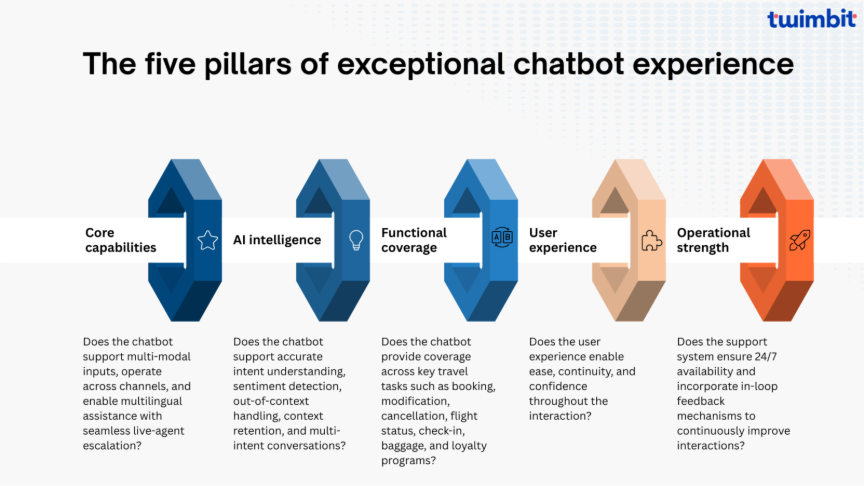
Can the chatbot reliably handle multiple input types (text, voice, image)?
Is it available across web, app, and messaging channels?
Does it support multilingual access and seamless live-agent escalation?
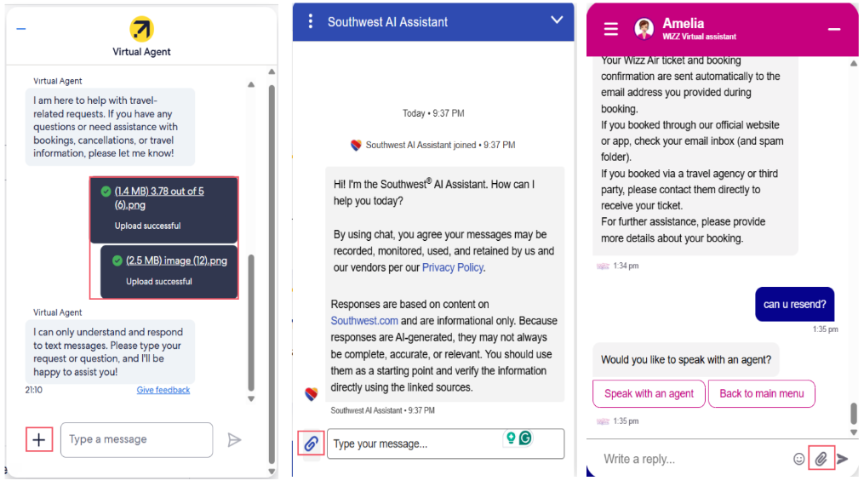
Many chatbots still redirect users to external pages instead of completing tasks within the conversation. Image input and multimodal capabilities remain rare outside leading performers.
Top performers demonstrate:
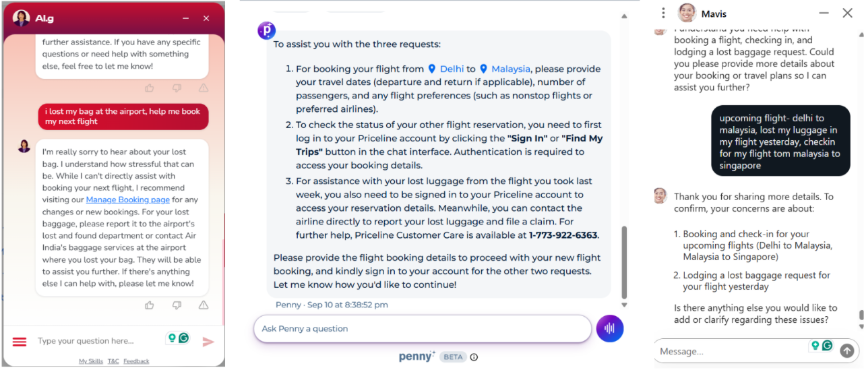
Lower-tier bots rely heavily on keyword-based detection, struggle with free-form inputs, and default to rigid menus.
Functional coverage: Supporting the end-to-end journey
We assessed coverage across:
A consistent pattern emerged:
Most chatbots provide static information. Fewer enable full transactional completion within chat.
Incomplete coverage creates dead ends. Customers are forced to switch channels, and friction accumulates.
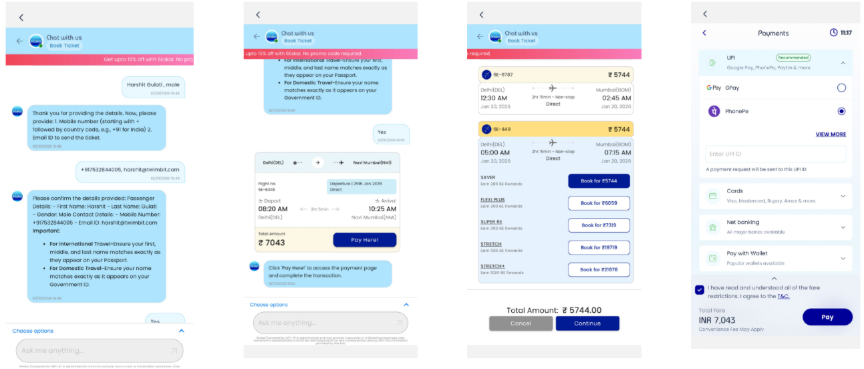
True effectiveness reduces handoffs and allows customers to complete tasks without leaving the conversation.
UX determines whether interactions feel effortless or mechanical.
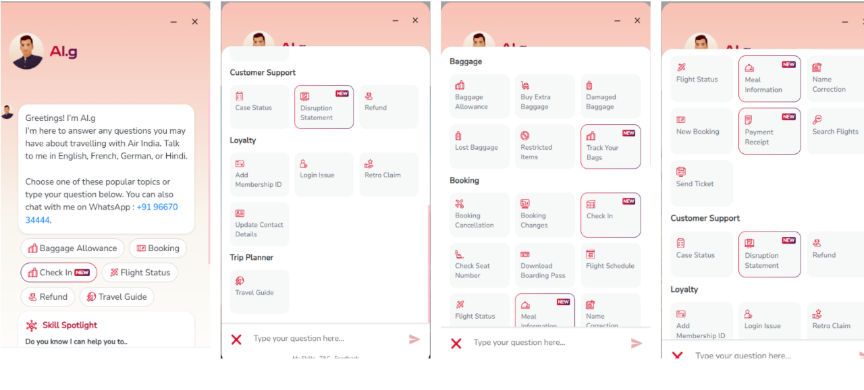
Leading bots feature:
Weaker bots hide entry points, overload users with menu trees, or lose context mid-conversation.
Customers remember how a chatbot made them feel — especially when something goes wrong.
Operational strength: Reliability under real-world pressure
This pillar evaluates:
Some bots are available around the clock but degrade during prolonged chats. Others lack structured feedback loops entirely.
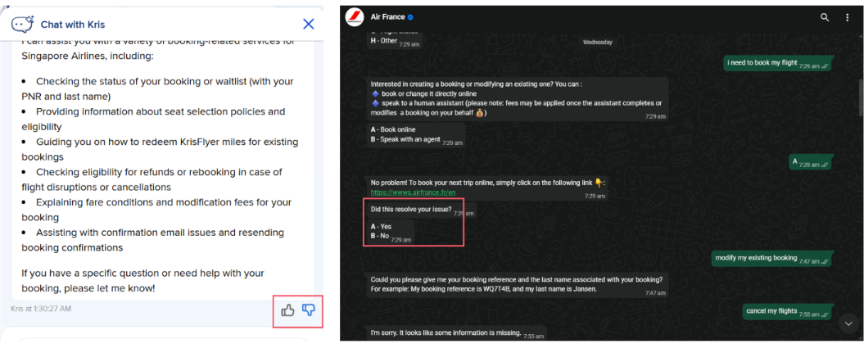
Operational strength is where trust is either reinforced or eroded.
Across the benchmark, the highest-performing chatbots share common traits:
These bots do not merely automate. They orchestrate.
Travel is inherently high-stakes. Delays, cancellations, missed connections, and lost baggage create emotional intensity.
In these moments, the chatbot is not a cost-saving tool. It is the brand. A chatbot that fails during critical moments erodes trust faster than one that sets clear limitations.

.svg)






.svg)
