.svg)

Blogs
Persistent SIM Binding for OTT Apps: India’s Security Masterstroke or a Privacy Disaster in the Making?
August 12, 2025

.svg)
.svg)


Blogs
%20(1).jpg)
Jatin Batra


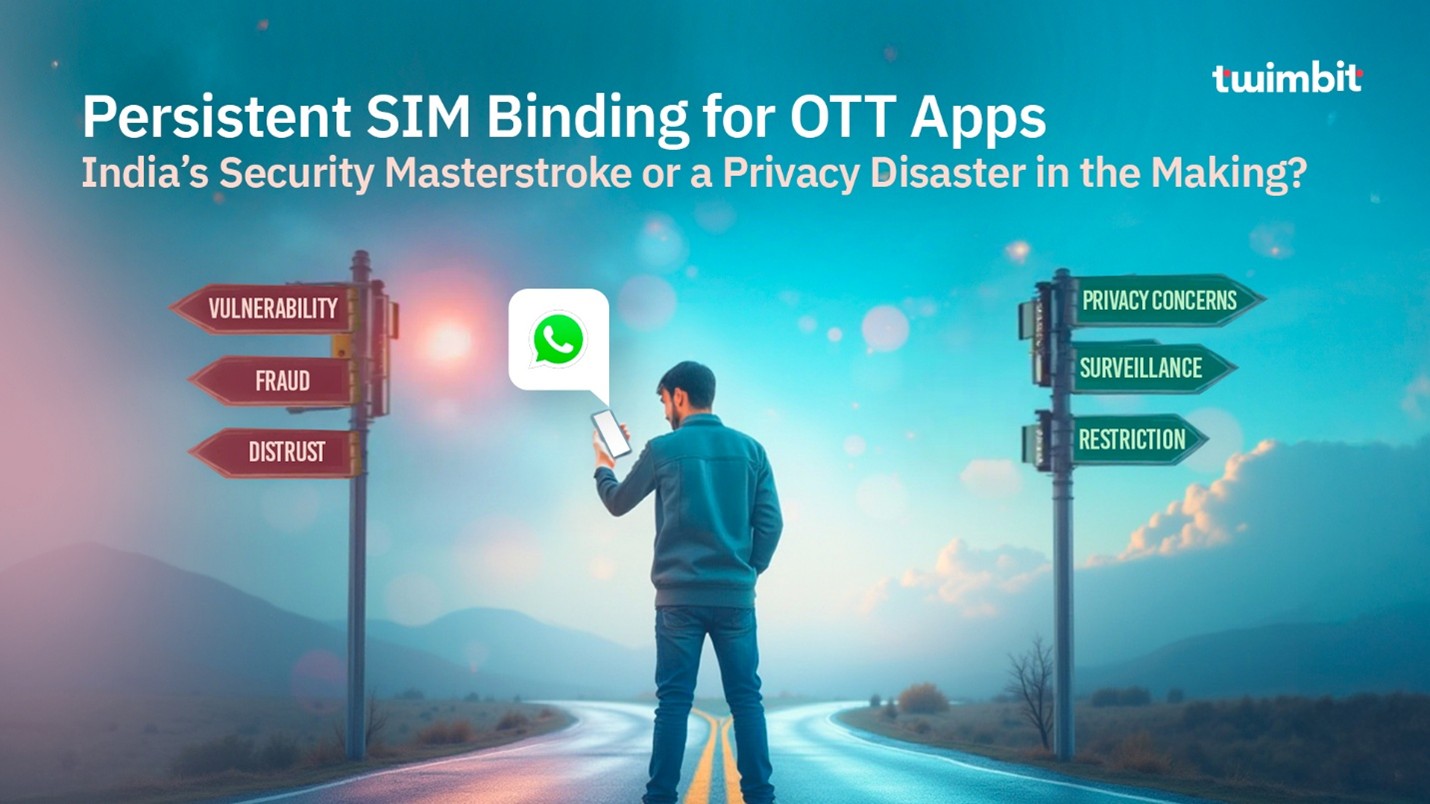
Imagine a world where every WhatsApp message, every Telegram call, is tethered to your physical SIM card — a digital leash ensuring traceability but potentially strangling privacy. India, with its 1.2 billion mobile subscribers, is on the brink of a seismic policy shift. The Cellular Operators Association of India (COAI), representing major Indian telecom operators, has proposed mandating persistent SIM binding for Over-the-Top (OTT) platforms like WhatsApp, Telegram, and Signal. This measure would require these apps to function only with a verified SIM card continuously present in the device—a “no SIM, no service” paradigm aimed at combating cyber fraud and enhancing national security. But is it a visionary step toward a safer internet, or a dangerous overreach that could alienate users and global tech giants alike? I believe this is a defining moment for India’s digital legacy—one that demands scrutiny and debate.
Let’s start with the why. India is grappling with an alarming surge in cyber fraud—with losses projected to cross ₹1.2 trillion in 2025, as predicted by the Indian Cybercrime Coordination Centre (I4C). OTT apps, with their ability to function independently of a SIM card, create security vulnerabilities by offering a cloak of anonymity. This has made them fertile ground for fraudsters, misinformation peddlers, and even national security threats. COAI’s proposal seeks to address these gaps by maintaining a constant link between the user, their mobile number, and their device, ensuring accountability and traceability. Here’s what it promises:
For Indian regulators and telecom operators, this is a rare chance to lead the world in telecom security innovation. Could India set a global benchmark, much like its UPI revolutionized digital payments?
But every fortress comes with hidden traps. Persistent SIM binding, while seductive in theory, is a Pandora’s box of privacy and operational risks that could fracture India’s digital ecosystem. As someone who’s witnessed the fallout of overzealous policies in markets like China, I see several red flags:
For OTT giants, this isn’t just a policy — it’s a potential dealbreaker. Could India’s bold move backfire, positioning it as a market that prioritizes control over collaboration?
Unlike real-name verification policies in China or South Korea, which largely target domestic apps, India’s persistent SIM binding directly confronts global OTT titans. WhatsApp, with nearly 3 billion global users, operates on a one-time SMS OTP for verification, not continuous SIM linkage. Forcing a redesign in India could create a ripple effect, fragmenting its platform and alienating users worldwide. If implemented, India would be the first major market to impose such a draconian regime on global players—a move that could either crown it as a pioneer in digital security or isolate it as a cautionary tale of regulatory excess.
The debate over persistent SIM binding boils down to a classic dilemma: security versus privacy. India doesn’t need to swing to extremes—there’s a middle path that can curb fraud without suffocating innovation. Here are some calibrated alternatives:
These strategies could position India as a beacon of smart regulation, proving that security and openness aren’t mutually exclusive.
Persistent SIM binding is a high-stakes proposal that could redefine the global OTT landscape. It offers a tantalizing promise to combat digital fraud and bolster national security, yet it teeters on the edge of privacy erosion, user alienation, and international backlash. As a telecom analyst who’s tracked India’s digital journey—from the 2G revolution to 5G ambitions—I see this as a pivotal moment. Will India emerge as a trailblazer in telecom security, or will it risk a legacy of control over collaboration?
The world is watching. To regulators, telco leaders, OTT executives, and policymakers, I pose this: How do we secure India’s digital future without sacrificing the trust and innovation that fuel it? What trade-offs are you willing to accept in this privacy-security tug-of-war? Share your perspective in the comments.
Connect to unlock exclusive insights, smart AI tools, and real connections that spark action.
Schedule a chat to unlock the full experience

.svg)






.svg)
