.svg)

Blogs
How Digital Experiences Will Evolve in 2026
Exploring the Trends Redefining User-Centered Innovation
Exploring the Trends Redefining User-Centered Innovation
February 10, 2026

.svg)
.svg)


.jpg)
Blogs
Exploring the Trends Redefining User-Centered Innovation

Felisa Aidadora Darmawan


Most digital products used to focus on functionality. If users could complete a task, the experience was considered successful. But in 2026, functionality is only the starting point.
Customers now expect systems to understand them.
They expect clarity without effort.
Speed without pressure.
Personalisation without discomfort.
Support without explanation.
A good interface no longer feels like a tool. It feels like a companion; it reduces uncertainty, it removes friction, it makes choices feel obvious.
When this happens, users rarely notice the design itself. What they notice is how easy everything feels, and that feeling becomes their perception of the brand.
This is where UX transforms into CX. Not through visuals alone, but through empathy translated into structure.
This evolution is not happening randomly. It is being shaped by several major design and technology shifts that are redefining how customers experience brands.
These trends are not about aesthetics. They are about trust, control, and emotional continuity.
1. Agentic Interfaces and Proactive Assistants

In 2026, many interfaces no longer wait for instructions. They act.
AI-powered agents now help users complete complex tasks automatically: booking services, managing subscriptions, resolving issues, and coordinating multiple systems in the background.
Instead of navigating five screens, users approve one suggestion.
When designed well, this feels empowering. When designed poorly, it feels alarming.
The difference lies in transparency.
Strong UX in this space makes agency visible. It shows what the system is doing, why it is doing it, and how users can intervene. It creates confidence instead of dependency.
From a CX perspective, this matters deeply.
Customers are no longer evaluating “how easy was this app?”
They are asking, “Can I trust this system to act for me?”
Design is now responsible for answering that question.
2. Real-Time Personalisation Without Intrusion
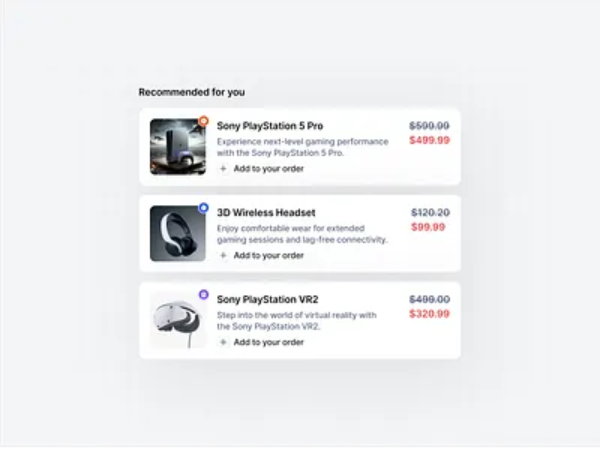
Personalisation in 2026 is no longer limited to recommendations. It reshapes entire interfaces.
Layouts adapt to habits.
Content adjusts to context.
Navigation reflects past behaviour.
Two users rarely see the same screen. When done right, this feels intuitive. The app seems to “know” what matters. When done wrong, it feels invasive and unpredictable.
The challenge for designers is balance. Users want relevance, but they also want stability. They want systems that adapt, without constantly shifting ground beneath them.
The best experiences offer both. This is where UX becomes a form of emotional regulation. It manages change in a way that feels safe.
3. Conversational and Multimodal Experiences
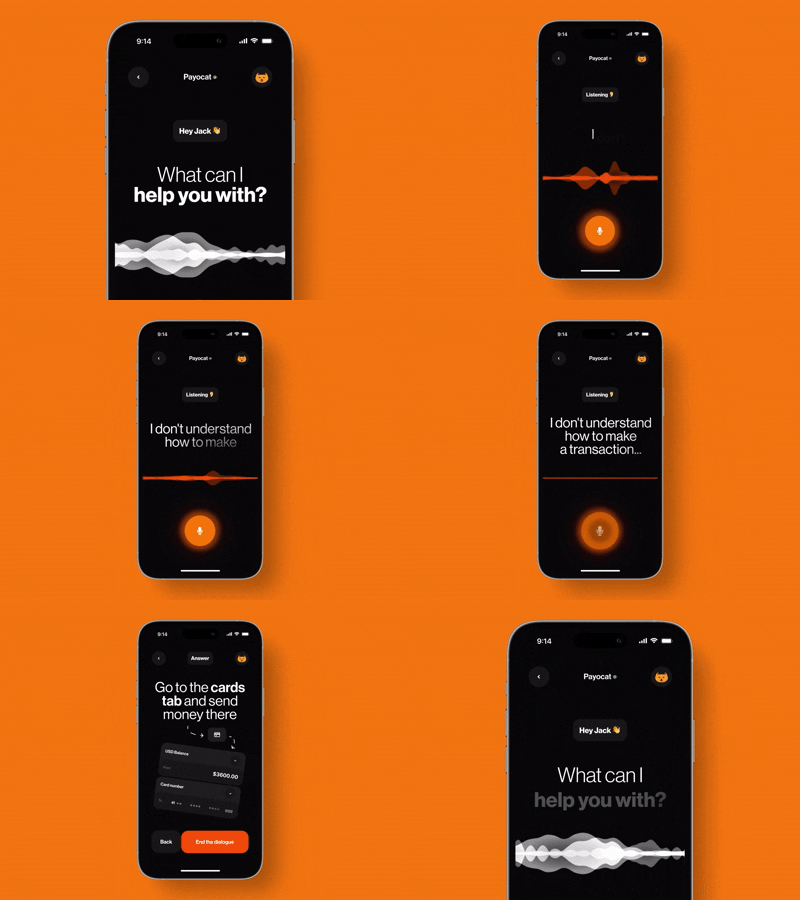
Screens are no longer the only interface.
Customers now move fluidly between typing, tapping, speaking, and listening. Voice assistants, chat interfaces, and visual dashboards are merging into single ecosystems.
In 2026, experiences are increasingly conversational. A conversation started on voice should continue on screen. A chatbot interaction should connect to human support without repetition.
Design in this environment is about orchestration.
It ensures that different modes feel like parts of one relationship, not separate systems stitched together.
From a CX standpoint, this reduces one of the biggest pain points in digital journeys: fragmentation.
4. Explainable and Trust-Centered Design
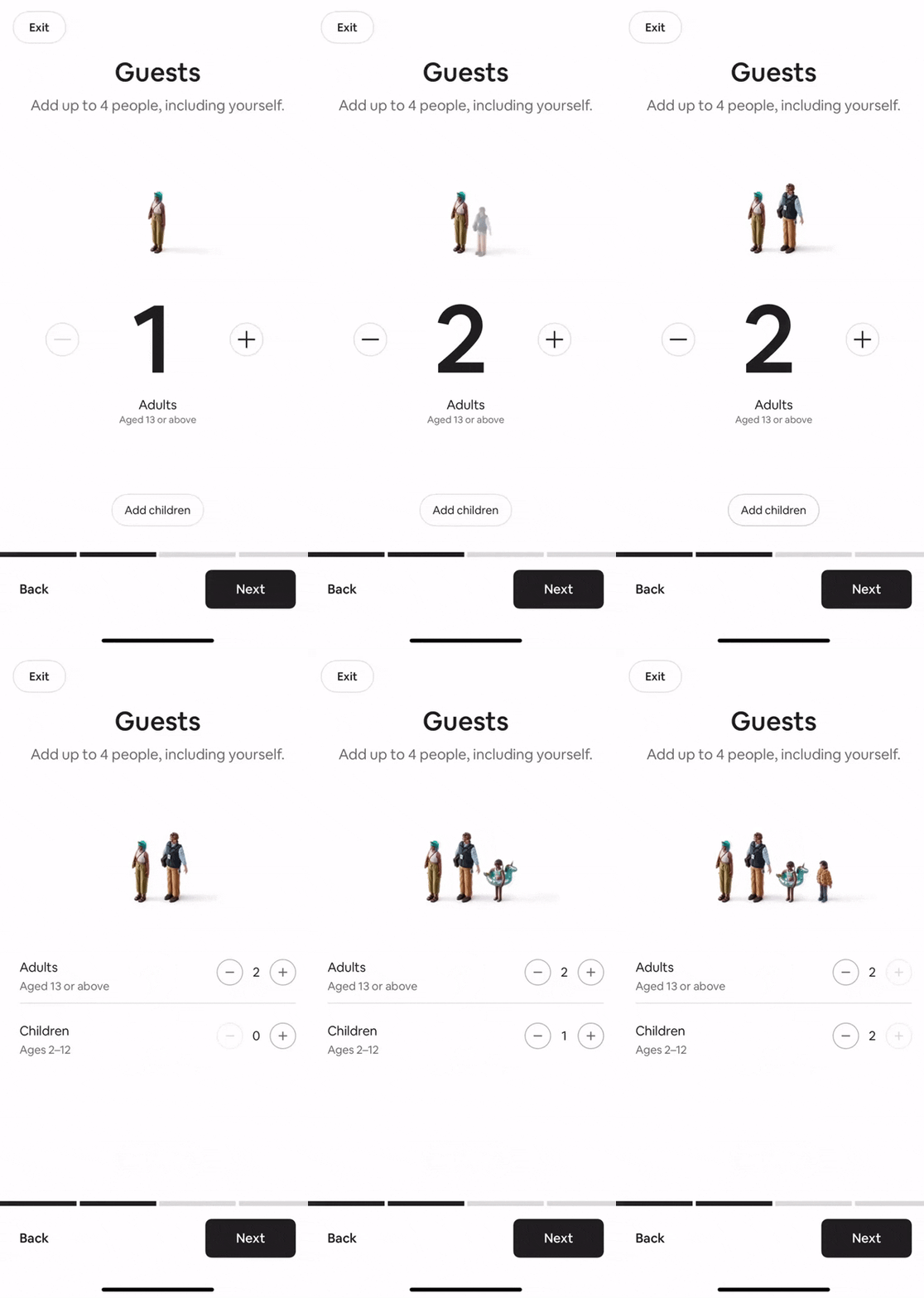
As AI becomes more embedded in customer journeys, users increasingly want explanations.
Why was this option prioritised?
Why did this price change?
Why was this action automated?
In 2026, “because the system decided” is no longer acceptable.
Good UX makes intelligence visible without overwhelming. It offers small, human-readable explanations. It provides simple controls. It respects autonomy.
Trust is no longer built only through policies and promises. It is built through micro-interactions. Explainability has become a core CX requirement.
5. Inclusive and Cognitively Comfortable Design
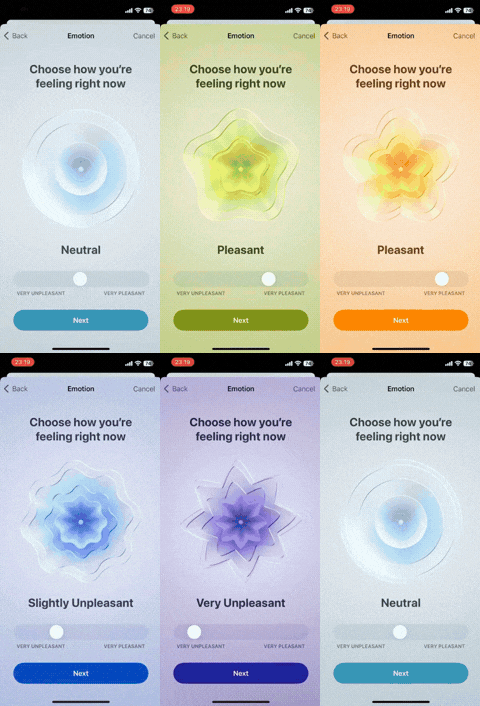
Accessibility in 2026 goes far beyond font size and contrast.
Interfaces are now designed to adapt to attention levels, cognitive load, emotional states, and situational constraints. They offer simplified modes, low-distraction layouts, and adaptive content density.
This shift reflects a deeper understanding of customers as human beings, not just users.
People are tired.
They are multitasking.
They are overwhelmed.
Design that respects this reality creates loyalty. Inclusive UX is no longer a compliance issue. It is a competitive advantage. It expands reach, reduces frustration, and strengthens emotional bonds.
In CX terms, it communicates care.
Today, most digital products offer the same basic functions. Payments work. Accounts sync. Services run. Functional parity is no longer a differentiator.
What sets brands apart is how these functions are experienced.
It appears in small moments: how clearly an app explains itself, how respectfully it handles errors, how thoughtfully it recognises loyal users, and how effortlessly it helps people move forward. These moments shape memory and trust. Over time, they determine whether customers stay or leave.
In this environment, interfaces have become a brand’s most consistent voice. They communicate values more often than campaigns ever will—through speed, clarity, tone, and structure.
In 2026, customer experience is delivered primarily through systems. And those systems are designed. This makes UI/UX a core CX capability, not a supporting function.
The brands that will lead are not the loudest. They are the ones whose products feel intuitive, reliable, and human—without needing explanation. Because in a digital-first world, experience is not what you promise.
It is what your product makes people feel.

.svg)






.svg)
