.svg)

Blogs
Autonomous CX: The Future of Customer Experience Without Intervention
April 24, 2026

.svg)
.svg)



Blogs
.jpg)
Divagaar Siva


You open your banking app to report an issue, only to realise it has already been resolved. A duplicate charge has been identified and reversed. No action needed.
You did not raise a request. You did not contact support. You did not even notice the issue.
It was detected, decided, and resolved.
That is where customer experience is heading next.
Welcome to Autonomous CX.
Customer experience has been evolving in layers. First, Silent CX reduced friction through intuitive design. Then Agentic CX introduced systems that could recommend or trigger actions. More recently, Predictive CX helped organisations spot problems before customers felt them. But many predictive systems still stop at alerts.
Autonomous CX goes further. It closes the loop. The system identifies the issue, decides, and acts without waiting for a customer to step in. In practical terms, it means the system doesn’t just escalate but it resolves.
This shift is being driven by a combination of technology, market dynamics, and customer expectations.
The implication is clear. Customers are no longer evaluating how fast you respond — they are noticing whether you needed to respond at all.
Autonomous CX is no longer theoretical. It is already visible across industries in the region.
Banking - DBS (Singapore)

_imgupscaler.ai_Beta_2K.jpg)
DBS has embedded AI across fraud detection and transaction monitoring. In recent cases, AI systems have helped stop scam-related transfers in real time before customers lost money. This is a clear example of autonomous CX where risk is detected, action is taken, and the issue is resolved before it becomes a customer problem.
Singtel’s Algo-Routing solution continuously analyses network conditions and dynamically reroutes traffic to maintain service quality. Instead of reacting to outages, the system actively prevents service degradation.
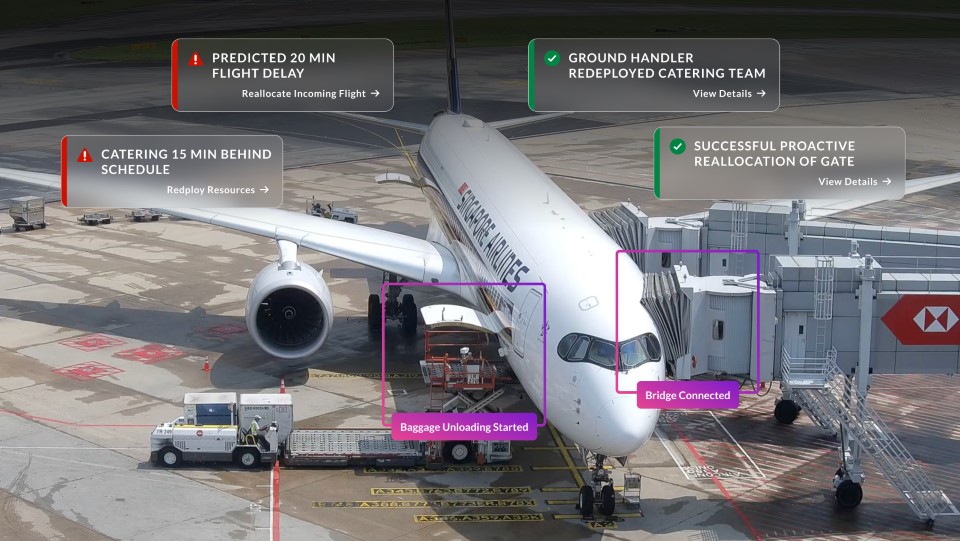
Changi Airport’s “Aircraft 360” system uses AI and computer vision to monitor aircraft turnaround activities and detect delays early. This allows teams to redeploy resources before passengers experience disruption.

E-commerce platforms operating in Malaysia have implemented automated refund mechanisms. If a merchant fails to respond within a defined timeframe, the system automatically processes refunds. This removes the need for customer follow-ups and ensures resolution without escalation.
Across all these examples, the pattern is consistent: the system acts before the customer needs to.
As CX becomes more autonomous, traditional metrics begin to fall short.
Instead of focusing only on response and resolution, organisations are starting to track:
Looking ahead, this shift will only accelerate. Gartner predicts that by 2029, agentic AI will autonomously resolve 80% of common customer service issues, contributing to a 30% reduction in operational costs.
The focus is no longer just service quality. It is about delivering outcomes without interaction.
Autonomous CX is not simply a technology shift. It is an operating model change.
To move toward autonomy, organisations need to focus on three areas:
It has been emphasised that organisations need to integrate agentic AI strategically, especially for routine and lower-risk tasks, before scaling autonomy further.
Customer experience is steadily moving toward a model where the best service is the one customers never have to think about.
Silent CX reduced friction; Agentic CX introduced action; Predictive CX enabled anticipation; Autonomous CX brings it together.
It creates systems that detect, decide, and resolve independently. And in that world, CX is no longer defined by faster responses, it is defined by systems that no longer need them.
Connect to unlock exclusive insights, smart AI tools, and real connections that spark action.
Schedule a chat to unlock the full experience

.svg)






.svg)
