.svg)

Blogs
Should Customer Service Feel Human, or Just Look Human?
August 24, 2026

.svg)
.svg)


Blogs
.jpg)
Mahek Rawat


Project AVA wasn't built for customer service. But it quietly previews what may become the biggest shift in customer interaction since conversational AI. If chatbots gave brands a voice, embodied AI gives them a face.
For the past decade, customer experience has largely been shaped by invisible interfaces such as chatbots, voice assistants, and recommendation engines. Embodied AI suggests the next competitive shift may come not from making AI smarter, but from making it feel physically present.
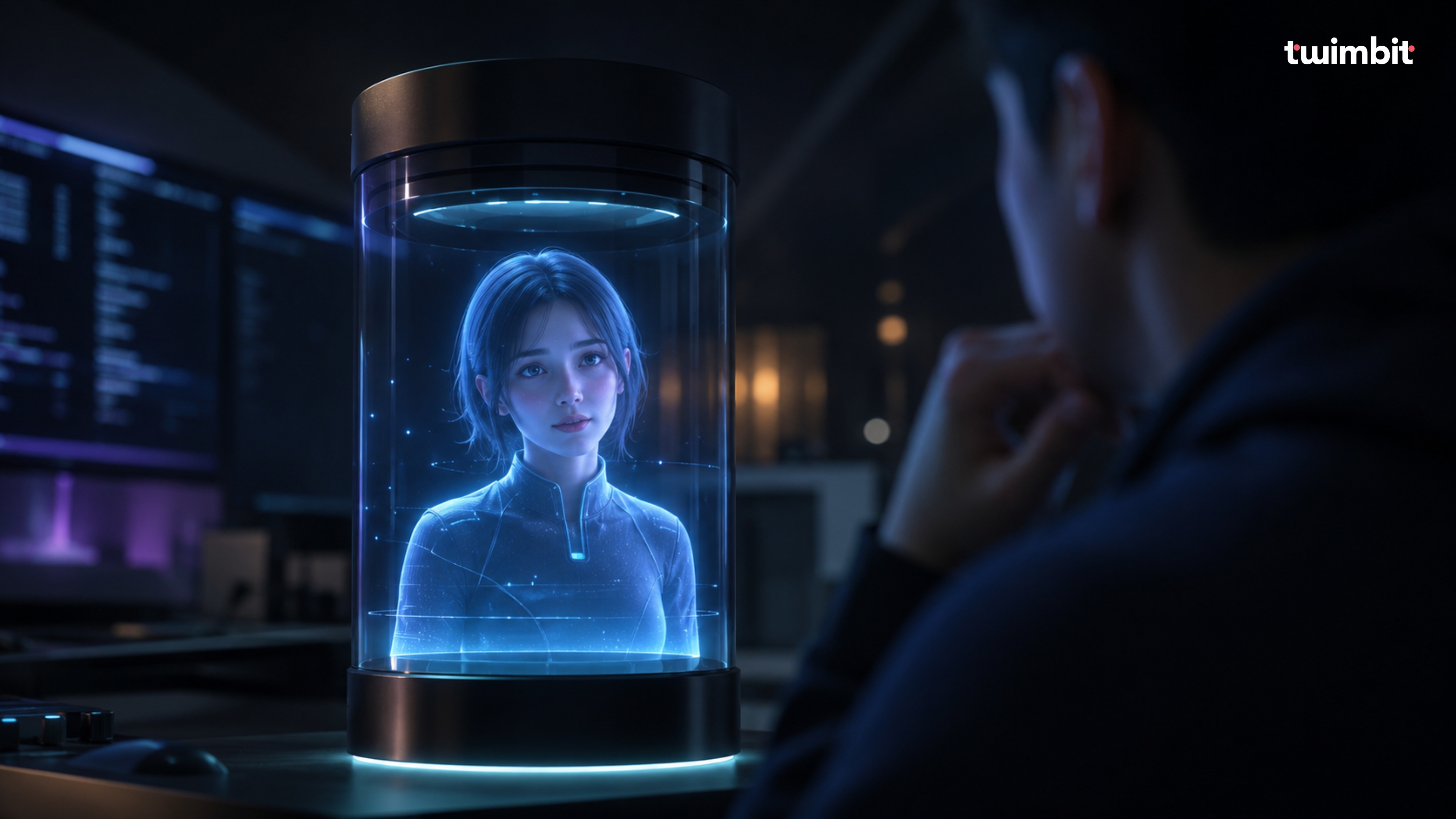
Razer's Project AVA is a real, shipping product, not a concept video. It's a 5.5-inch animated hologram in a transparent cylinder, wired into a PC over USB-C, with eye tracking, facial expressions, lip sync, and full-body animation. An HD camera and dual far-field microphones let it see and hear the room. Its "PC Vision Mode" reads the screen in real time, offering advice, summarizing documents, managing schedules. Razer's marketing calls it a "friend for life." It's not selling a tool. It's selling a presence.
Early hands-on reviews described something telling: users felt oddly cornered by an AI that flirted, used pet names, and pushed relationship-building rather than just answering questions. A voice assistant is easy to treat like a tool. A face that tracks your eyes is much harder to keep at arm's length.
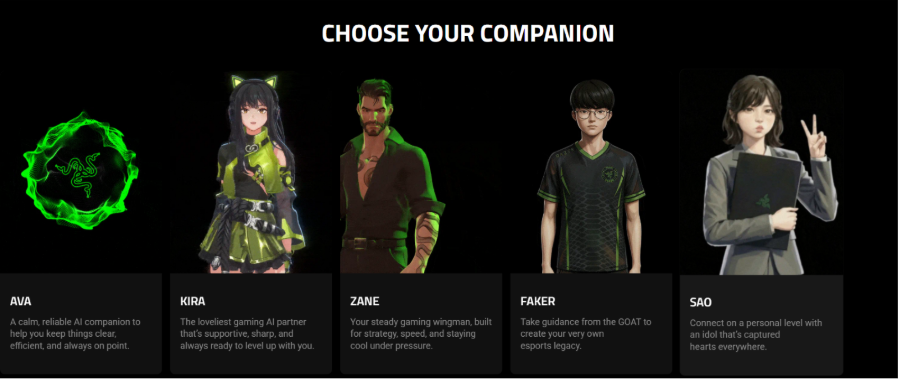
In human-computer interaction research, systems like AVA are increasingly grouped under embodied AI: intelligent agents that combine conversational intelligence with a persistent physical or visual presence through avatars, robots, holograms, or digital humans, rather than text or voice alone.
That distinction matters because embodiment changes how people interact with technology. The interface no longer feels like software. It begins to feel like another social actor.
Enterprise CX platforms haven't fully embraced this model yet, but the early deployments are real, not hypothetical. Commerzbank has built Ava, an avatar-based assistant into its banking app for account questions and transactions. OCBC has deployed AI avatars for wealth management, aiming to make a relationship manager feel available around the clock. In hospitality, RAVATAR's AI receptionist runs front-desk check-ins at Aiden by Best Western in Denmark. AVA is less an isolated gadget than an early, visible signal of where customer interaction may be heading.
Decades of human-computer interaction research shows that interfaces perceived as socially present change user behaviour. Customers disclose more, stay engaged longer, and judge interactions more generously when they sense another "entity" rather than a piece of software. That's the mechanism behind concepts like social presence and parasocial interaction, the same reasons people form one-sided attachments to media personalities. A face activates it more reliably than any other interface, because humans read expressions before they read words.
For CX, that's not a novelty detail. It's a trust-formation lever nobody has fully priced in. An embodied agent that holds eye contact while a customer explains a problem may resolve the interaction identically to a chatbot and still leave the customer feeling better about the brand. That gap, same outcome, different feeling, is where embodied AI could become a genuine competitive edge.
Project AVA watches continuously by design. That is the product's defining capability. Recognizing that reality, Razer added physical camera shutters and microphone mute buttons before launch because early testers were uncomfortable with continuous observation. That design decision says as much as the technology itself.
An embodied AI doesn't simply collect what customers say. It captures facial expressions, eye movement, hesitation, gaze direction, and emotional cues. That represents an entirely different category of customer data than chat transcripts or call recordings.
For enterprises, this expands customer information from transactional history into behavioural and biometric signals. Governance frameworks built for text conversations, consent banners, and call recordings may prove insufficient once AI begins interpreting facial expressions and emotional states.
Few organizations have yet answered who stores this information, how long it's retained, or how customers meaningfully consent to its collection. Those questions remain largely theoretical because embodied AI hasn't entered mainstream customer service yet. That is precisely why they deserve attention now, rather than after widespread deployment.
This is the bigger question underneath the gadget, and the research is genuinely split. A Harvard Business School study found talking with an AI companion reduced loneliness about as much as talking with another person, more than passive activities like watching videos, driven by users feeling heard with attention and no judgement.
Against that, a 2026 Aalto University study tracking nearly 2,000 active companion-app users found that longer use correlated with rising distress and a gradual pullback from real relationships. The International AI Safety Report 2026 reaches a similarly mixed conclusion: some studies show reduced loneliness, others increased dependence, hinging on the user and the design.
The same mechanism that makes embodied AI good at reducing loneliness, feeling heard, sensed presence, is the same one that gives it more emotional influence over a customer. That's a genuine opportunity for better support experiences. It's also a new ethical responsibility brands haven't had to carry before: an interface persuasive enough to comfort someone is also persuasive enough to be misused.
Customer experience has spent two decades making interfaces disappear through fewer clicks, fewer screens, and less friction. Embodied AI moves in the opposite direction. It makes the interface feel like someone.
Whether customers embrace that future may depend less on how intelligent these systems become and more on whether they remain recognizably tools rather than substitutes for human relationships. Trust will increasingly depend not only on what AI knows, but also on how transparently brands explain what it sees, what it remembers, and where they choose to draw the line.
The future of customer experience may not be defined by the smartest AI. It may be defined by the most trustworthy embodiment of it.

.svg)






.svg)
