.svg)

Blogs
AI Will Not Shrink the World. It Will Expand What Is Possible.
When intelligence becomes cheaper, possibility becomes larger.
When intelligence becomes cheaper, possibility becomes larger.
September 28, 2026

.svg)
.svg)



Blogs
When intelligence becomes cheaper, possibility becomes larger.

Chari TVT


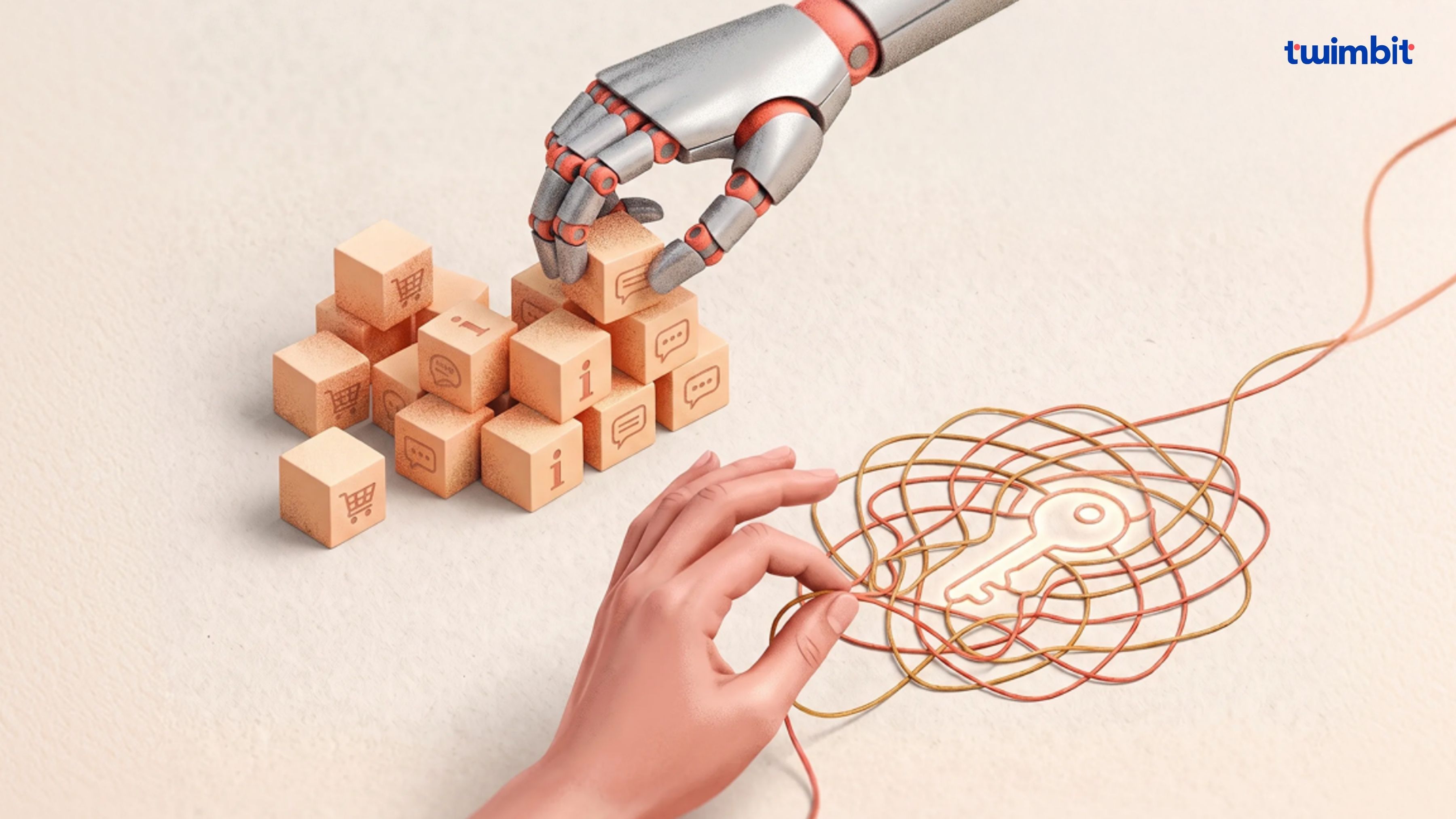
We hear plenty about what AI will destroy: jobs, salaries, professions and perhaps even human relevance. The disruption is real. But history suggests another possibility.
Technology repeatedly turns expensive capabilities into affordable ones. Cars, air travel, computing, communication and solar energy all followed versions of the same pattern:
The Value Pattern: Innovation ──> Scale ──> Lower Cost ──> Greater Access ──> More Demand ──> New Industries
AI could accelerate this cycle by reducing the cost of something fundamental: cognitive capability.
If intelligence becomes dramatically cheaper, healthcare could become more predictive and personalised. Education could become continuous. Small companies could access capabilities once reserved for large corporations. Housing and infrastructure could be industrialised. Energy systems could become smarter. Geography and language could become smaller barriers.
Some jobs will disappear. Cyber threats will increase. The benefits will not be distributed automatically.
But perhaps we are asking the wrong question. Instead of asking “What will AI take away from us?”, we should also ask: “What will humans create when intelligence and the ability to solve problems become dramatically more accessible?”
Thirty years ago, for many Asian families, travelling to the United States could consume a substantial part of a year's salary. Today, for many professionals, that journey can represent a few weeks of earnings rather than many months.
Salaries went up. But the real cost of travel also came down. Aircraft became more efficient, competition increased, booking became digital and low-cost models changed aviation.
And when flying became cheaper, we did not fly less. We travelled more.
That created more airports, hotels, restaurants, booking platforms, tourist attractions and an enormous experience economy.
What if AI does something similar to intelligence?
We have seen this repeatedly.
Economists have a useful idea for this: the Jevons Paradox. In the nineteenth century, William Stanley Jevons observed that as steam engines became more efficient, coal consumption did not necessarily decline. Cheaper useful power opened more applications, expanding demand.
Now apply that thinking to AI. If AI makes software development twice as productive, do we need half as many developers? Possibly. But what if companies build five times as much software?
If AI makes legal analysis cheaper, will we simply need fewer lawyers? Or will millions of small businesses and individuals who could never afford sophisticated legal assistance begin consuming it?
AI may do to intelligence what the steam engine did to physical power and the semiconductor did to computing: dramatically reduce the unit cost, only for humanity to discover that its appetite for intelligence is enormous.
The steam engine amplified muscle. Steam engine didn't eliminate human physical labor but rather redirected human effort toward managing machines, designing systems, and leading organizations
Electricity made power portable.
Computers made calculation cheap.
The internet made information instantly distributable.
AI begins to reduce the cost of cognition itself.
It is not free. AI requires chips, data centres, networks and enormous amounts of electricity. The technology industry continues to invest heavily in reducing AI inference costs.
But cognitive capability is becoming increasingly scalable.
And when cheap intelligence meets the physical world, things get interesting. , AI moves the human premium away from routine cognitive labor (drafting, calculating, basic processing) toward high-level judgment, strategic decision-making, empathy, and creative inquiry.
Healthcare: From Symptoms Towards Causes
Imagine healthcare moving from:
“What medication controls this symptom?”
towards:
“What biological mechanisms are causing this condition in this particular person?”
AI can increasingly combine genomic information, proteins, imaging and clinical records to identify complex patterns and biomarkers. AI is also helping researchers improve CRISPR gene-editing design and predict unintended effects.
We cannot simply identify “the DNA causing inflammation” and eliminate it. Human biology is far more complicated. But the direction is extraordinary: from symptoms towards mechanisms, from generic treatment towards precision medicine, and from reacting to illness towards predicting and preventing it.
The prize may not be sensational predictions of living to 150. It could be something more valuable: living healthier for longer.
California company Reflect Orbital is developing satellites with mirrors intended to redirect sunlight towards selected locations after sunset, potentially extending the productive period of solar farms. The technology is experimental and faces environmental and astronomical questions, but consider the audacity of the idea: attempting to make sunlight schedulable.
Alongside such ideas, we are advancing batteries, renewable energy, smart grids, new nuclear technologies and AI-based grid optimisation. AI consumes significant energy, but it can also improve forecasting, coordinate storage and make electricity networks more efficient.
Today's physical constraint can become tomorrow's engineering problem.
Cars are manufactured in factories. Why shouldn't more homes be? Modular construction moves large portions of construction into controlled manufacturing environments and can substantially shorten project schedules. Robotic 3D printing is already being used in housing developments, including a 100-home project in Texas.
Combine AI design + digital twins + prefabrication + robotics + new materials, and construction begins looking more like manufacturing. The same eventually applies to bridges, schools and other infrastructure. Not every ten-year infrastructure project will suddenly take three months. Approvals, land, geology and safety remain real. But design and construction can become dramatically faster.
And the real saving is not simply money. It is time.
The model of learning for 20 years and then using that knowledge for another 40 is becoming obsolete.
Imagine instead having a personal tutor available whenever curiosity strikes.
AI can adjust explanation, pace and difficulty to the learner. UNESCO recognises the potential of AI-enabled personalised learning while stressing that teachers, critical thinking and human interaction remain essential.
This changes the competitive advantage. The winner may no longer be the person who knows the most. It may be the person who never stops being curious.
This is perhaps underestimated.
A small business historically needed developers, designers, analysts, translators, marketers and other specialists. AI increasingly gives a small team portions of all these capabilities.
Imagine a three-person company in Kuala Lumpur researching global markets, developing software, translating its offering, analysing its finances and serving international customers with capabilities previously available mainly to large corporations.
The minimum efficient size of a business could fall.
AI may not merely replace employees inside corporations. It may enable more employees to become entrepreneurs outside them.
Translation becomes easier. Expertise travels digitally. Knowledge moves instantly.
A Malaysian SME can draw upon knowledge from Boston, Bengaluru, Shenzhen or Berlin.
A student thousands of kilometres from a leading university can access world-class explanations.
AI will not eliminate geography. But it can reduce the economic penalty of geography.
The world becomes smaller geographically, while potentially becoming much larger economically.
And as more people exchange ideas, more ideas collide. That is where innovation happens.
We should not romanticise the future.
AI will empower doctors, scientists and entrepreneurs. It will also empower fraudsters, hackers and hostile actors.
Power, water, healthcare, telecommunications and transport could face increasingly sophisticated attacks. CISA has warned that AI developments can increase the speed and scale of vulnerability discovery, while AI is also being deployed defensively to strengthen cybersecurity.
So: Attackers get AI. Defenders get AI.
Technology does not eliminate the ancient contest between good and bad actors. It makes both more powerful.
We should say this plainly.
Some jobs will disappear. Many more will change. There is no guarantee that someone displaced today will immediately find a better job tomorrow.
But as routine intelligence becomes cheaper, other capabilities become more valuable: Judgment. Curiosity. Creativity. Trust. Empathy. Negotiation. Leadership. Accountability.
AI can recommend closing a factory. A human being must decide what happens to the employees and community.
AI can propose a medical treatment, while continuous health monitoring through wearable devices and connected technologies can detect emerging conditions earlier, often before symptoms become apparent. This may enable faster intervention and increase demand for timely medical care. However, the doctor remains ultimately accountable for diagnosis, treatment decisions, and patient outcomes.
AI can produce an answer. Humans still have to decide whether it is the right answer.
And perhaps there is another paradox.
When content becomes abundant, authenticity becomes scarce.
When analysis becomes cheap, judgment becomes valuable.
When recommendations become infinite, trust becomes valuable.
When machines can generate almost anything, deciding what is worth creating becomes valuable.
The human premium doesn't disappear. It moves.
Ultimately, AI's greatest contribution may not be cheaper products. It may be time.
Time saved by the accountant.
Time returned to the doctor.
Months removed from construction.
Years potentially removed from scientific discovery.
Hours saved learning something new.
Time is the one resource humanity cannot manufacture or recover.
So perhaps the defining question of the AI age is not:
“What will machines take away from us?”
It is:
“What will humanity build, explore and become when intelligence becomes dramatically more accessible?”
There will be disruption. There will be inequality. There will be cyber threats. Some technologies will fail. But doom is not destiny.
Thirty years ago, technology made travelling across the world affordable to millions more people.
AI may now do something similar to intelligence, knowledge and human capability.
The world may become smaller geographically, yet enormously larger in possibility.
And perhaps AI's greatest contribution will not be giving us cheaper answers. It may be giving us back the time to ask better questions.

.svg)




.svg)
