Twimbit X
Who owns the results of your AI?
November 12, 2026


Join 6000+ industry executives who trust us.
Join 6000+ industry executives who trust us.

Varnika Goel


As AI leaderboards pushed usage up and budgets down, the real question became who owns the results.
Earlier this year, a group of Amazon employees built a leaderboard ranking colleagues by how much AI they used. Some began running AI on trivial tasks just to climb it, and Amazon shut the board down.
Uber ran a similar leaderboard, and by April its entire 2026 AI tools budget was gone. Its COO later said the company struggled to connect that usage to new features for customers.
Both leaderboards were meant to drive adoption, and they did, leaving each company with a large bill and an open question about what it had bought.
The harder conversation is about what AI should change, and who owns that answer.
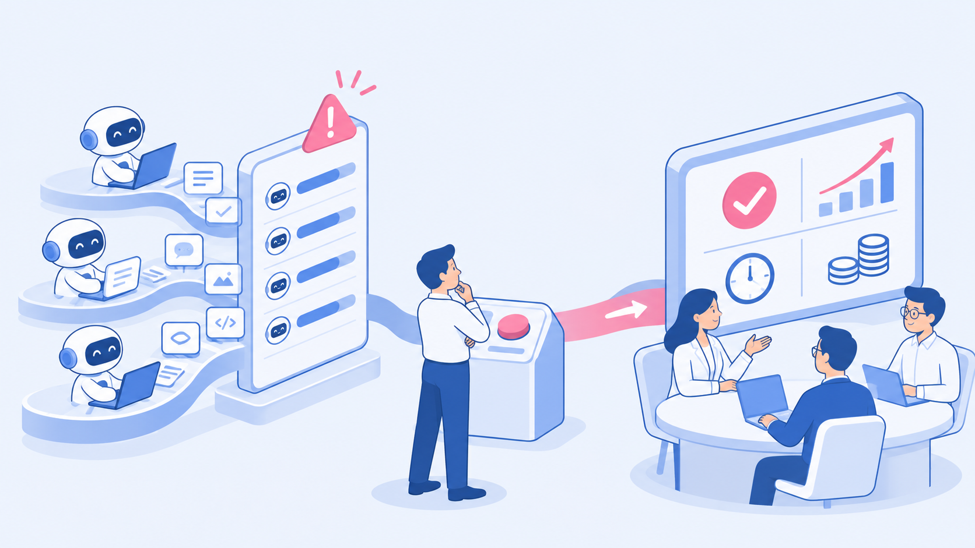
In most companies, that answer is split. Finance sees the spend, IT manages the licences and team leads run the workflow, while the result AI is meant to improve often sits with someone else. With no single owner, usage becomes the scoreboard because it is the one number everyone can see.
The natural owner is whoever already answers for the result. A sales leader owns win rate, a service head owns resolution time and a marketing lead owns campaign pipeline. Tie AI spending to their number, and every review comes back to whether the work improved for what it cost.
Santander shows the approach holds even when attribution is messy, putting a figure of €194 million on the business value its AI initiatives delivered over nine months. Its CFO admitted that with AI built into every process, isolating its share is difficult.
An agreed number gives leaders something to manage.
Whether your team is still exploring AI or already running agents, three conversations help put an owner on the result.
Usage will keep rising as agents take on longer tasks. Which number will your team be celebrating when it does?
With Twimbit X, we build tools that help teams expand what they're capable of, not just how fast they move. The goal is to expand what your team can credibly handle. If this sparked an idea, let’s explore it together. Reach out to see how Twimbit X can help your team raise its own ceiling.
Book a call