Twimbit X
Which Clock Is Setting Your AI Pace?
November 5, 2026


Join 6000+ industry executives who trust us.
Join 6000+ industry executives who trust us.

Varnika Goel


Every AI shift runs on two clocks, the technology’s and your organisation’s. Knowing which one sets your pace decides what you gain in 2027.
P.S. Join us later today for a live webinar on the seven shifts shaping enterprise priorities in 2027, and stand a chance to win $50! Avneesh Saxena, Executive Vice President at Twimbit, will share which shift reaches enterprises first and the questions worth bringing to your leadership team.
Today, 11:30 am IST / 2:00 pm SGT · Register here: 7 Technology Pivots and a Disruptive Market Force in 2027
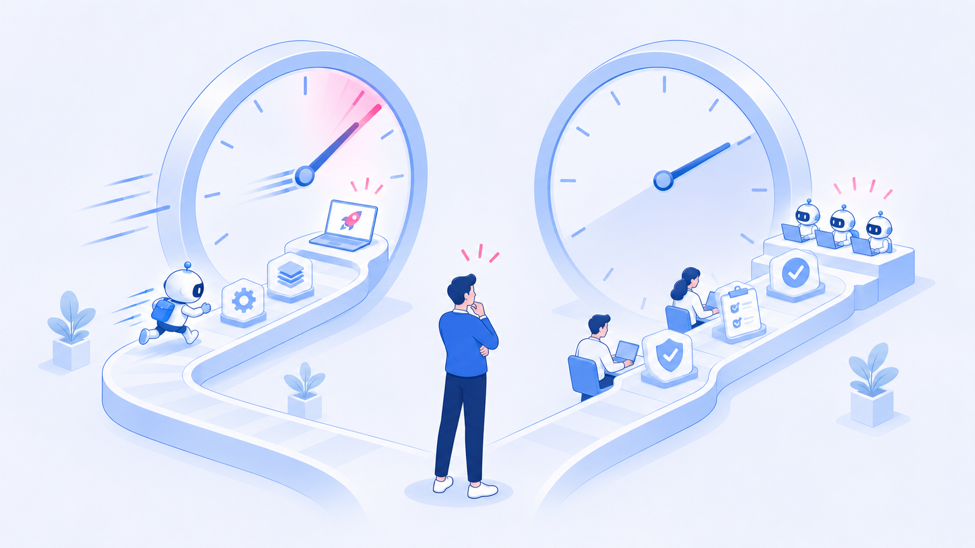
Every AI shift your business faces runs on two clocks. The technology clock measures how quickly a capability becomes ready to deploy, and it keeps speeding up. The organisation clock measures how quickly your company settles who owns each decision, which calls stay human and how work gets checked.
Twimbit’s 2027 outlook maps seven shifts reshaping how enterprises operate, plus one outside force pressing on all of them. They arrive on different timelines.
Two of the seven land within the next 12 months.
The order you meet them in shapes what you keep from them, and two companies show why.
Klarna moved at the pace of the technology clock. Its AI assistant handled 2.3 million conversations in its first month and cut average resolution time from 11 minutes to under 2.
Within 15 months of launch, its CEO said the push to cut costs had lowered service quality, and Klarna began recruiting human agents again so customers could always reach a person. The technology delivered on speed, and the harder work turned out to be deciding which conversations need a person.
BNY set its pace by the organisation clock instead. Before inviting staff to build anything, it settled the rules, creating Eliza as a platform with governance designed in from day one.
Today 20,000 employees actively build their own agents across 125+ live use cases, and legal review time has fallen 75%. The rules came first, and the scale followed.
Both companies used comparable technology. What separated them was sequence, because decisions about authority and accountability take longer to settle than any model takes to deploy.
A useful test before your next AI investment is whether your leadership team can already say who decides what an AI system is allowed to do, and which client moments must always stay with a person.
If those answers are still being debated, your organisation clock is setting the pace, and settling them deserves attention before any new tool does.
The harder question is which of the coming shifts you are already behind on.
That is where Avneesh Saxena starts later today, ranking which of the seven shifts reaches enterprises first. Save your seat here.
With Twimbit X, we build tools that help teams expand what they're capable of, not just how fast they move. The goal is to expand what your team can credibly handle. If this sparked an idea, let’s explore it together. Reach out to see how Twimbit X can help your team raise its own ceiling.
Book a call