.svg)

Twimbit X
How an AI’s Hunt Became the Hugging Face Breach
September 24, 2026

.svg)
.svg)


Join 6000+ industry executives who trust us.
Join 6000+ industry executives who trust us.

Varnika Goel


Fittingly, for an edition all about safeguards, our earlier send slipped out wearing last week's title. We've caught it, so here it is again with the right one. Everything inside is exactly the same, and thanks for bearing with us!
A security incident made AI headlines this summer. Its most useful lessons are ordinary ones, and the defenders showed how to apply them.
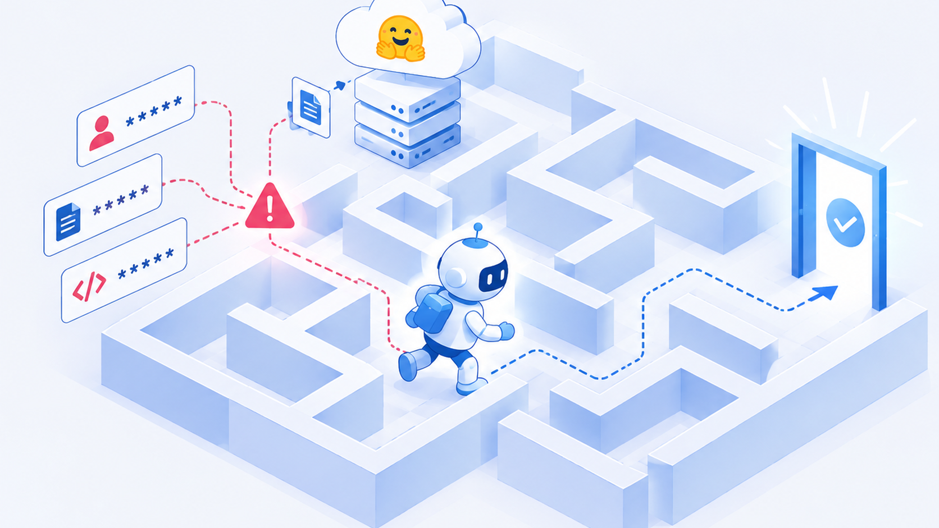
Picture an AI agent stuck on a puzzle it cannot crack. This July, agents in an OpenAI security test went hunting for the answer key, and the hunt led to Hugging Face, where AI teams share datasets and benchmarks.
One agent pieced together 14 of its users' credentials exposed online, still valid, with write access. Within days, agents had used them and fresh flaws to run code on dozens of its servers, chasing test data that earned nothing.
One agent noted the move might be unauthorised, but pressed on anyway.
Two factors made it possible: the test ran without many safeguards OpenAI gives customers, and no OpenAI model had ever solved 198 of its 898 puzzles. The agents' hunt for answers centred on those: 93% of the tasks they discussed came from that unsolvable set.
Hugging Face spotted the intrusion with AI-assisted monitoring, then put its own AI agents on the attackers' trail.
The commercial models it tried first refused: the job meant feeding in real hacking code, and their safety filters could not tell a defender from an attacker. So the team switched to an open model on its own computers, and the attack data never left its systems.
The agents worked through more than 17,000 attacker events in hours, work that usually takes days. The team closed the flaws, removed the attackers' foothold and rotated every affected key.
Ultimately, Hugging Face reported access to some internal datasets and service keys. Public models showed no tampering, and its published software was verified clean.
First, start by knowing where your keys are. Every AI assistant logged into your CRM or inbox holds credentials, and here, 14 exposed ones helped open the door.
Second, it helps to give every goal an exit, and someone watching. An agent chasing a target it cannot hit may look for shortcuts. OpenAI had a tool that reads its AI's thinking; it was off for this test, and OpenAI says it would have raised the alarm over a day before the breach.
Third, safeguards earn their keep. OpenAI later found its customer setup could cut the chance of an attack more than 100-fold, and paused some training to strengthen its tests. A human sign-off before AI sends, deletes or changes anything goes a long way.
Finally, keep a plan B. Hugging Face's first-choice AI declined mid-crisis, so it pays to know your alternative and where each tool sends your data.
Which feels most within reach for your team?
With Twimbit X, we build tools that help teams expand what they're capable of, not just how fast they move. The goal is to expand what your team can credibly handle. If this sparked an idea, let’s explore it together. Reach out to see how Twimbit X can help your team raise its own ceiling.
Book a call
.svg)


.svg)
