.svg)

Twimbit X
AI Made Us More Productive. But where did the time go?
May 28, 2026

.svg)
.svg)


Join 6000+ industry executives who trust us.
Join 6000+ industry executives who trust us.

William Kiong Wai Lun


AI was supposed to give us our time back through offloading of manual and repetitive tasks. So why does it feel like we have less of it?
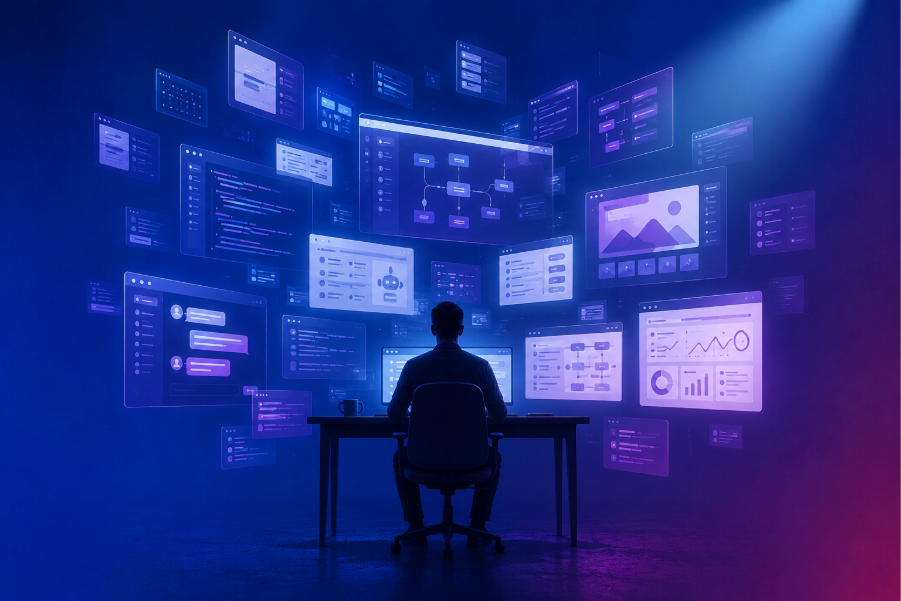
We were promised the boring stuff would disappear like data cleaning, process following and information synthesis. Give people AI tools, watch the busywork evaporate, free everyone for the work that matters. That was the deal.
So why do we all seem more wrung out, not less?
Researchers at UC Berkeley's Haas School went looking for the answer. They spent eight months inside a tech firm, fully expecting to document AI lightening the load. They found the reverse.
Here's the trap. Because AI made tasks easy to start, people simply started more of them. Coffee breaks became prompting sessions. The same eight hours quietly swallowed more work in the same day, not less. The researchers called it workload creep, and left unchecked, it ends in burnout.
The exhausting part of AI was never doing the work. It's checking it.
When an agent drafts in seconds, you become the editor, the fact-checker, the final call, all day long. The bottleneck moves from the typing to the judgment. And judgment doesn't scale the way a model does.
There's a name for this now. AI brain fry. A study found the people hit hardest weren't the ones using AI the least, they were the ones juggling the most of it at once.
The fatigue doesn't stop at the front line. If you're approving AI across teams, you're also drowning in its output, more to review, more to sign off, all landing at once. That tired feeling you keep spotting in your people? It's yours too.
We're all stuck on the same road.
So, what do we do with this? Pulling back on AI isn't the move. Rebuilding the work around it is.
Most teams did the easy thing first: they bolted AI onto the work they already had. Same tasks, same targets, same week, now with an assistant. That's the trap. You haven't changed the job, you've just added a layer of checking on top of it.
Redesign means changing the job itself. Treat oversight as real work and count it before you grade anyone on speed. Cut the tool sprawl, since a few agents that talk to each other beat a dozen that don't. Build the pauses back in, because those breaks are where thinking happens, the judgment AI still leans on us for.
But the deepest fix is the scoreboard. As long as we reward the same outputs and the same hours, people will keep piling AI onto old habits and burning out doing it. Change what you measure, and the work redesigns itself. Leave it untouched, and the fastest engine in the world just helps everyone reach exhaustion sooner.
With Twimbit X, we build tools that help teams expand what they're capable of, not just how fast they move. The goal is to expand what your team can credibly handle. If this sparked an idea, let’s explore it together. Reach out to see how Twimbit X can help your team raise its own ceiling.
Book a call


.svg)

.svg)
