.svg)

Twimbit X
AI Agents at Work
January 1, 2026

.svg)
.svg)


Join 6000+ industry executives who trust us.
Join 6000+ industry executives who trust us.

William Kiong Wai Lun


Happy New Year from Twimbit X! As you set your 2026 resolutions, let’s discover how digital agents are transforming the way we work, connect, and grow.
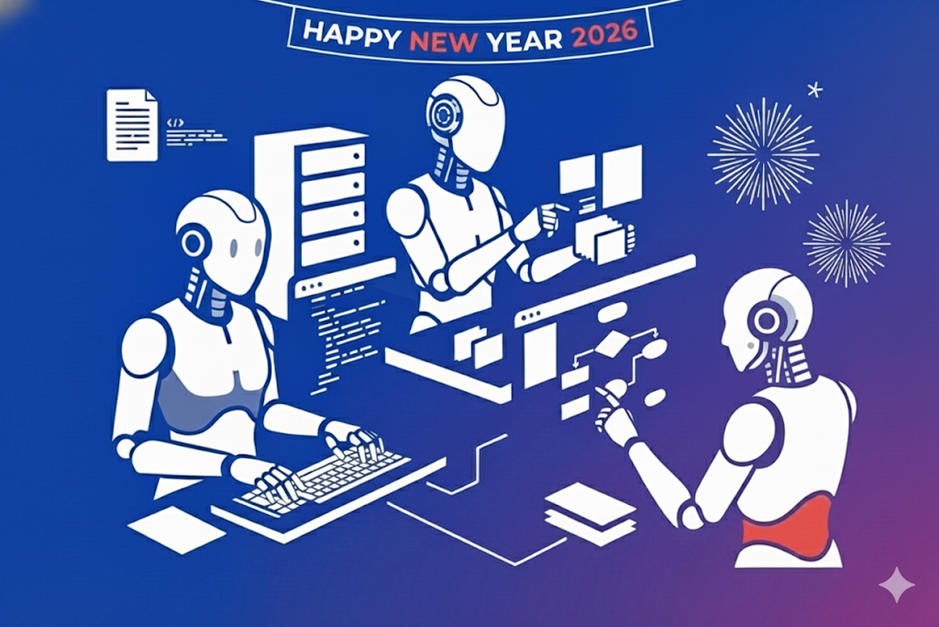
2025 marked the moment AI agents outgrew their roles as simple assistants. The conversation moved from "What can AI automate?" to "What can AI orchestrate?" Today’s AI agents are trusted with coordinating complex, personalized experiences across vast digital landscapes.
A fitting example: Spotify Wrapped 2025. Rather than just tallying top songs, Spotify’s AI filtered out background noise, respected privacy settings, and synthesized nearly a year of music, podcast, and audiobook data. The result: individualized stories, emotional milestones, and special days that felt magical and accurate — an orchestration of context-aware insights, not just automation. This signals the future: AI agents as creative collaborators, not just efficient workers.
As we enter a new year full of possibilities, AI agents now deliver hyper-personalised interactions that go far beyond generic recommendations. In the past year, these digital agents became context-aware, adjusting strategies for seasonality, sentiment, and even economic shifts. Personalisation evolved into a dynamic, adaptive process: AI agents now recognize when a customer needs change with the seasons, when sentiment shifts after major events, or when business cycles demand a new approach.
HubSpot’s AI agents exemplify this shift. They autonomously adjust outreach cadence and messaging in real time, calibrating their approach based on lead responsiveness, calendar activity, and broader engagement patterns. This move toward "micro-orchestration" is redefining personalisation — every interaction becomes situationally intelligent, driving stronger relationships and outcomes.
As we peer into the new year, the AI agent landscape is set for even more magic: by 2026, 40% of enterprise applications will have built-in, task-specific AI agents — a remarkable rise from under 5% at the start of 2025. The big leap? Convergence of multi-modal AI, like Google Gemini, with agentic frameworks. Soon, AI agents will seamlessly switch between text, voice, and video, negotiate, schedule, and even co-create alongside humans.
Yet, as these agents gain autonomy, governance and explainability become critical. The next competitive edge will go to those who ensure their AI agents are transparent, auditable, and aligned with organizational values.
Here's how to stay ahead:
With Twimbit X, we build tools that help teams expand what they're capable of, not just how fast they move. The goal is to expand what your team can credibly handle. If this sparked an idea, let’s explore it together. Reach out to see how Twimbit X can help your team raise its own ceiling.
Book a call
.svg)


.svg)
