.svg)

Twimbit X
Fable 5: Three Days Down, One Lasting Lesson
June 18, 2026

.svg)
.svg)


Subscribe to our newsletter
Join 6000+ industry executives who trust us.
Twimbit X
Join 6000+ industry executives who trust us.

William Kiong Wai Lun


Last Friday, one government letter took two of the world's most capable AI models offline. What it revealed about how enterprises have been building AI advantage is the more important story.
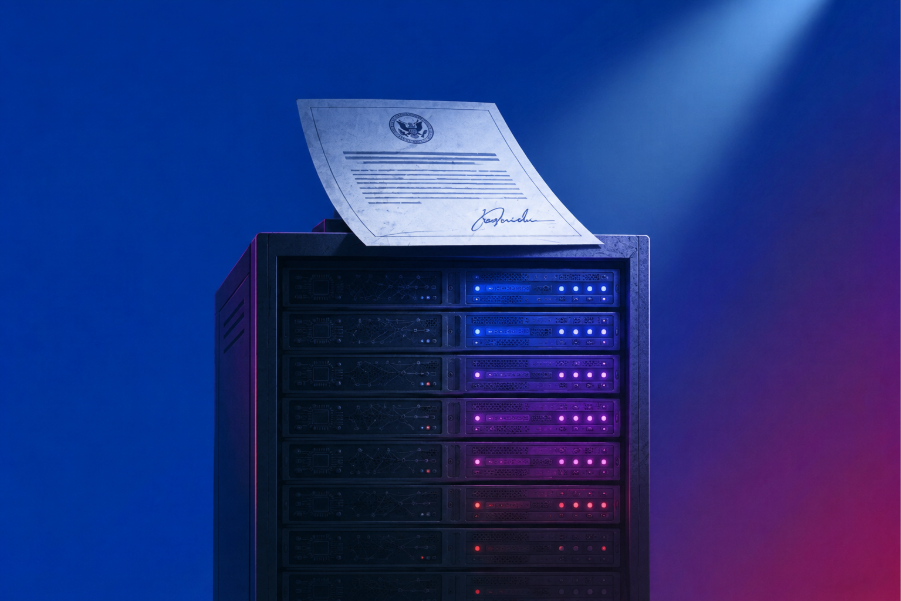
On June 13, the US Commerce Department sent one letter to Anthropic. By midnight, Fable 5 and Mythos 5 were offline, globally, for every non-American user on the planet, including Anthropic's own employees. No runway, no negotiation, no workaround.
The timing sharpens the lesson. On June 10, Dario Amodei published an essay arguing that governments should hold legal authority to shut down dangerous frontier models, comparing it to the FAA grounding unsafe aircraft. Two days later, the Commerce Department applied exactly that logic to his own company.
Anthropic had publicly made the case for exactly this kind of intervention. When it came, there was nothing to negotiate.
The mental model most enterprises brought to AI was SaaS: evaluate, subscribe, swap when something better arrives.
A directive landed at 5:21pm ET. The model was dark by midnight, no transition window, no workaround. The provider complied and customer workflows were collateral.
Your AI vendor can lose access to their own model before you lose your SLA. That asymmetry is the real lesson.
The immediate damage was contained. Fable 5 had been available for three days. Most enterprise teams hadn't built anything serious on it yet.
The more uncomfortable realisation came a day later, when teams started asking whether this could happen to the models they rely on. Most teams don't have a clean answer to it.
Few enterprise leaders today can name every model their workflows depend on. Map it: which tools, which providers, which processes would break if access disappeared overnight. The real exposure is in the models your reps have relied on for a year.
Then ask where your AI advantage is actually embedded. The more deeply AI is trained on your own context, your deal history, your content patterns, the less any single provider's availability determines your edge.
When your context is deep enough, the model becomes a delivery mechanism. Your data does the work regardless of which provider is online.
Add continuity to your AI evaluation criteria. Alongside capability, cost, and integration, every new AI decision now needs to answer: what happens to this workflow if the model goes dark?
The competitive edge in AI is moving from access to depth. Access can be revoked. Depth compounds.
At Twimbit X, we believe the AI advantage lives in your context, not in a provider’s availability. Here’s how we help:
The Three-Pillar Framework for Successful Enterprise AI Agent Deployment
Our article examines why most enterprise AI agent deployments stall between pilot and production — and what separates the ones that don't. The answer isn't better models or bigger budgets. It comes down to three disciplines in sequence: grounding agents in proprietary context, redesigning workflows around AI's limits, and earning genuine adoption from the people expected to use it.
Anthropic Blocks All Public Access to Claude Fable 5 and Mythos 5 — What Enterprises Should Do
VentureBeat's article unpacks the mechanics of the Fable 5 shutdown and why it won't be the last of its kind. The more useful half is the enterprise action list: what to audit, what to switch, and why provider diversification is now a business continuity decision, not an IT preference.
Before we wrap up
The AI advantage that holds up is the one built on what only your team knows.
At Twimbit X, our products are designed around that principle. Your context, your data, and your team's knowledge compound over time in ways that no export directive can touch.
If you're rethinking how your team builds and holds AI advantage, we'd be glad to explore what that looks like together.